


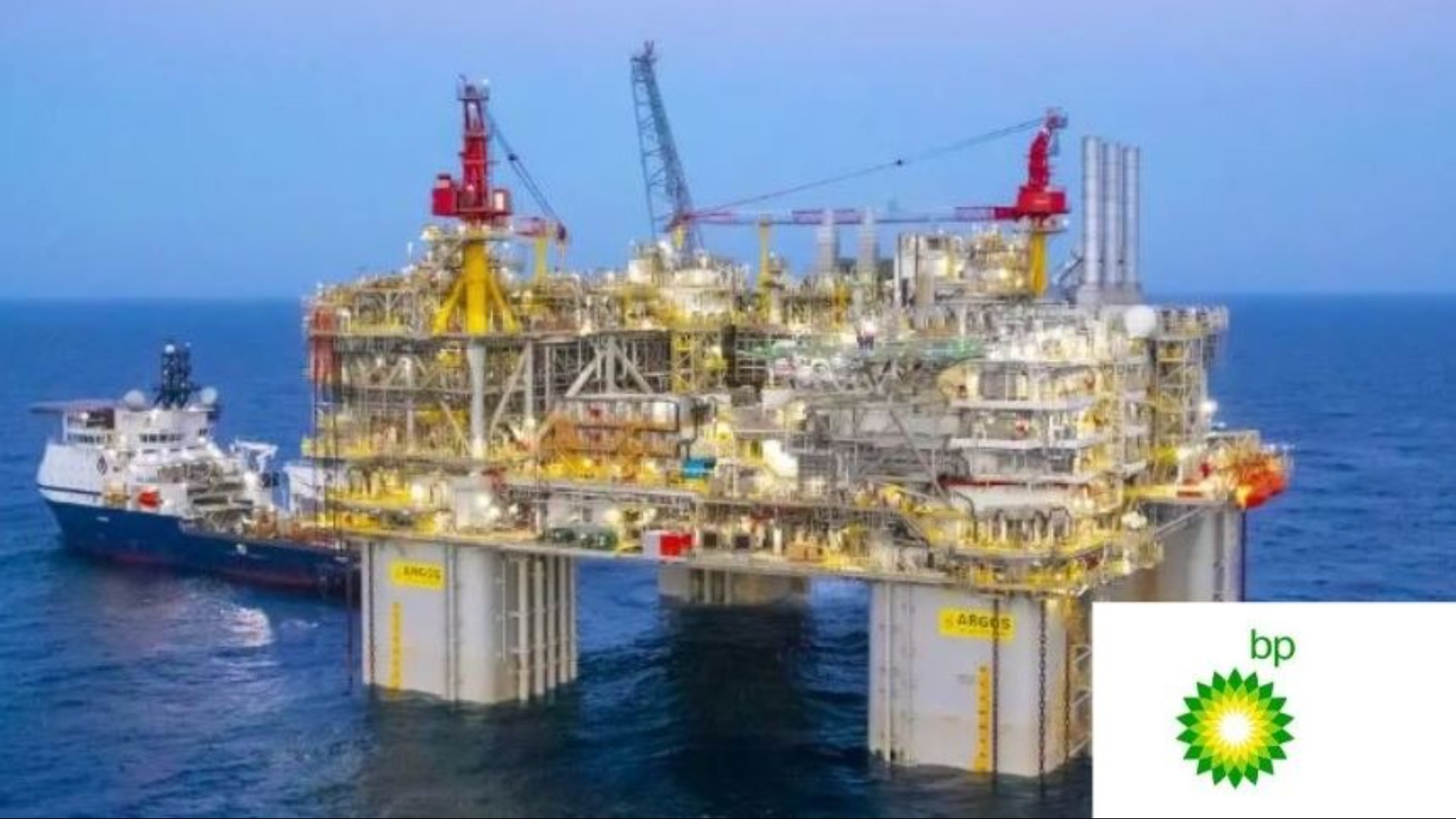
- BP stock has gained less than 1% in the last five trading sessions, contrasting with oil's 14% rise
- Investors are concerned that a pause to the company's share buyback denies them opportunities to benefit from the oil price surge
- Progress in Brazil's Bumerangue find could define BP stock performance later in the year
Oil prices have jumped about 14% in the last five trading days because of Middle East worries, with Brent crude briefly going over $118 a barrel on Monday before settling down. But BP stock (LSE: BP.) hasn’t moved much, gaining less than 1%. So what’s happening?
Windfall Tax Extension and the 500p Pivot
BP stock surged to a three-year high of over 500p on March 9 as energy markets priced in supply concerns. But it’s mostly been below that mark since. That divergence demands a serious explanation.
The windfall tax acted as a direct profit interceptor. The UK government’s windfall tax is grabbing a good chunk of BP’s profits. Chancellor Rachel Reeves was thinking about ending the North Sea windfall tax early. This tax is set to end in March 2030, but rising prices thanks to the Middle East situation made her hold off.
The Energy Profits Levy (EPL) currently imposes a 78% effective tax rate on North Sea energy firms. That rate means for every pound of incremental revenue BP generates from North Sea operations as oil prices rise, the government takes roughly 78 pence.
Holding past 500p won’t come just from geopolitical tension. Instead, BP must show operational consistency and stability. The opportunity lies in the Bumerangue find in Brazil, packing roughly 8 billion barrels. Should those reserves turn into low-cost, high-return output, BP stock would build substantial upside momentum. If that happens, flipping the 500p mark from a resistance to a support by late 2026 would suddenly be more likely to happen.
Buyback Suspension Removes Key Support
The pause in buybacks has taken away an important support for the stock price. BP stopped buying back shares to pay down debt, aiming for under $20 billion. Buybacks usually prop up the stock.

When they are absent, the natural buyer of last resort disappears, and the stock becomes more sensitive to sentiment-driven selling. In a week when crude surged but BP barely moved, the absence of buyback support was a contributing factor. While companies such as Shell and Exxon keep funneling large sums back to investors, BP choosing instead to shore up finances drags noticeably on perception.
Opportunities and Risks
The opportunity set for BP is genuine and multi-layered. With management’s targets based on oil at around $74 a barrel, and it’s now over $90, the numbers change a lot. Higher prices boost profits and cash flow, easing worries about dividends and debt. But, because BP stopped buybacks, there’s no support if people start selling.
BP Stock Price Forecast
The BP stock RSI is at 60 but falling, indicating control by the sellers. The pivot is at the psychological 500p. Solid support is established at 10-day EMA at 490.45p, below which the second support could come at 481.32p, corresponding to the 20-day EMA. Primary resistance remains at 504.49p, and a stronger one at the year-to-date highs of 515p.
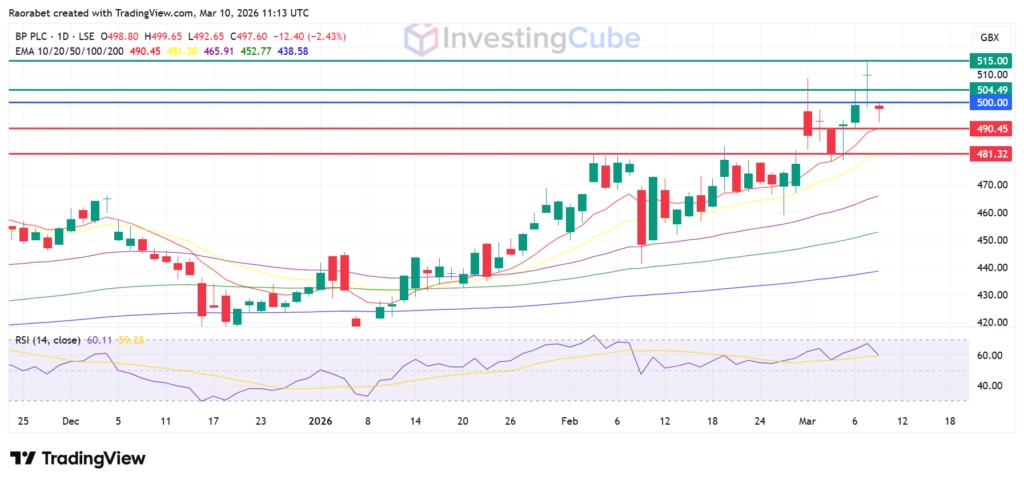
BP Stock price daily chart with key levels of resistance and support on March 10, 2026. Created on TradingView
BP paused buybacks in February to lower debt. Higher oil prices help cash flow, but not giving back to shareholders makes the stock less appealing compared to others.
High prices help BP reach its net debt target faster. After that, they should restart buybacks, which could boost the stock.
Technically, BP needs a weekly close above 510p to confirm a breakout. Fundamentally, this likely requires the company to demonstrate a successful transition toward its high-margin upstream projects in Brazil and the Gulf of Mexico.