



- The Middle East war is about two weeks old and financial markets have felt its impacts
- Prices of assets like gold and oil have spiked while some import-dependent equities in parts of Asia have been declining
- Despite the high risk brought by war, there are investment opportunities in some assets
The conflict in the U.S., Israel, vs Iran war is now in its second week, creating a lot of instability in the global financial market. What makes this different from past local issues is that the 2026 trouble has hit the Strait of Hormuz, which is key for global trade. So this isn’t just a small problem, it’s a big one for everyone.
The Most Affected Assets
Energy is right in the middle of this. Because the Strait of Hormuz is closed, Brent crude went up 10–13% to about $80–82 per barrel by March 2. About 20% of the world’s oil passes through this strait. Markets analysts forecast prices could jump to $100 per barrel if this keeps up, which could raise global inflation by 0.8%. At least 150 tankers, carrying crude oil and LNG, are waiting outside the Strait, near the coasts of Iraq, Saudi Arabia, and Qatar.
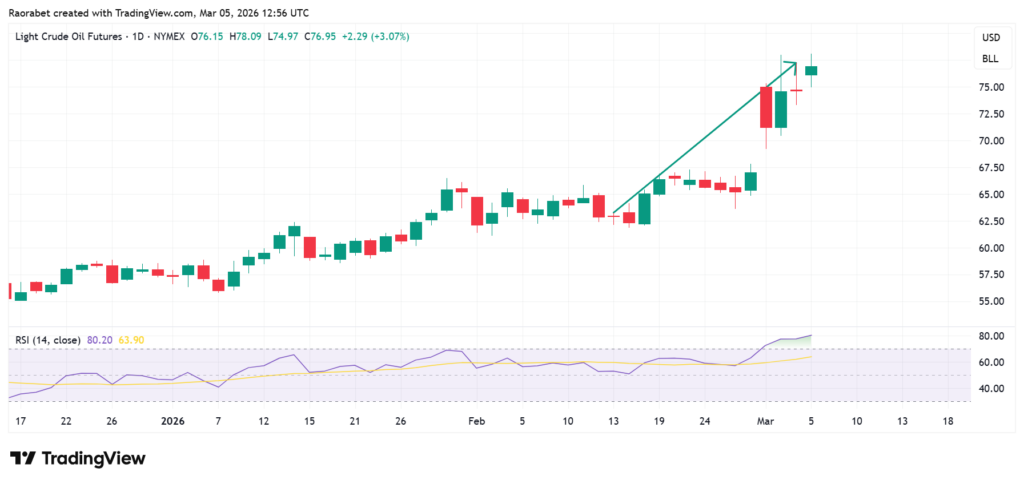
Brent crude price on the daily chart in 2026 with a notable spike in recent days following the Middle East War. Note the RSI at 80. Source: TradingView
Gold has become a top choice as a safe investment. It went above $5,300 per ounce, setting new records as investors looked for safety. JP Morgan thinks gold could reach $6,300 per ounce by December 2026.
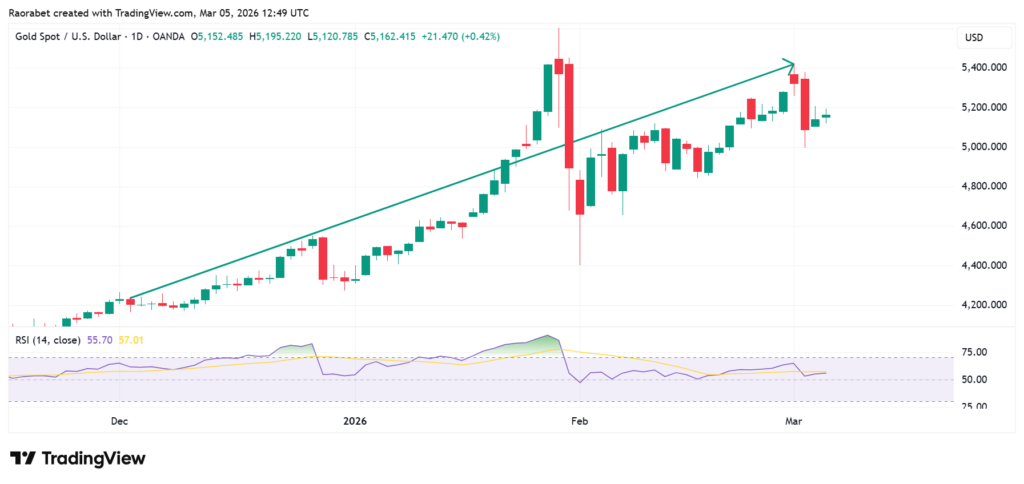
Gold price daily chart since December 2025. Source: TradingView
Cryptocurrencies have been flashing signs of volatility and hasn’t been that safe. Some investors see these assets as a safety net, but limited cash might hold it back. Again, they have showed that it’s not really a reliable safe option.
Emerging Market Bonds from Gulf countries like Qatar and Oman have dropped, with higher return rates because people are worried about defaults.
Aluminum prices are the highest they’ve been in four years since the region produces 9% of the world’s supply. Overall, industries that depend on the economic cycle, like materials and manufacturing, are struggling, while tech stocks like Nasdaq have risen a bit, as people look for more secure investments.

Defense stocks have moved fast. Lockheed Martin jumped 7% on March 2, hitting a record of $692.00, and Palantir is still doing well because it expects more government contracts for its AI.
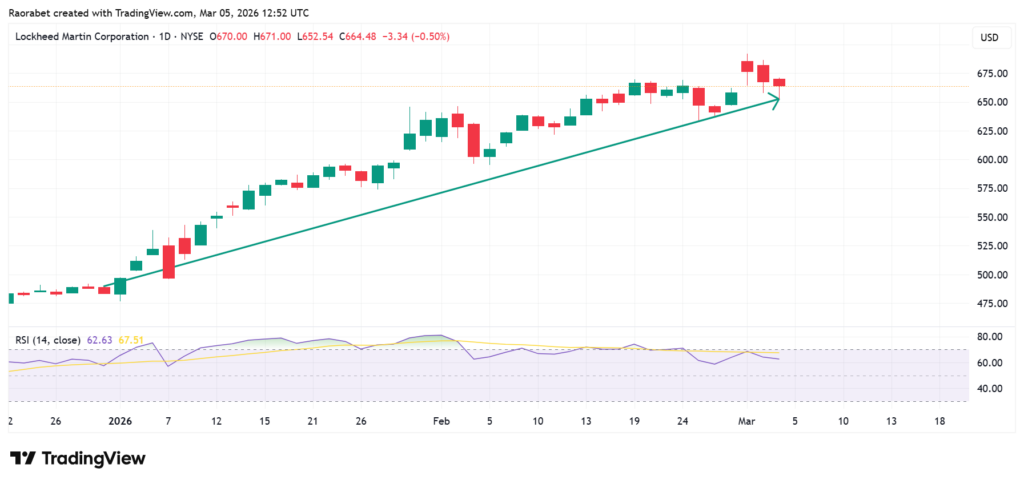
Lockheed Martin stock performance on the daily chart in 2026. Source: TradingView
Investment Opportunities and the Risks They Carry
Defense and aerospace seem like the most obvious choices now, but it’s worth being careful. Defense stocks tend to go up when a conflict starts but don’t usually stay that high. Some experts say that if Iran’s missiles are badly damaged in the next few weeks, it might reduce demand for some regular military gear.
A more solid chance lies in the long-term increase in military spending. NATO countries plan to spend 5% of their GDP on defense each year by 2035, and the US Congress has already approved $900.6 billion for defense in 2026.
Still, there are substantial risks. Higher energy costs could cause inflation, which might make the Federal Reserve delay cutting interest rates. Traders are now expecting fewer than two rate cuts for 2026. Problems with the supply chain could make stagflation worse, especially for countries that import energy, like Europe and Asia.
Also, instability could get worse, and emerging markets could see money leaving. Investors need to think about these risks and how much they can handle, avoiding too many investments in unstable goods.
The war has pushed Brent crude up over 7% to $80 per barrel because of problems with the Strait of Hormuz, and it could go to $100 if the situation continues, raising global costs.
Gold has risen to $5,334, offering some safety. JP Morgan suggests that a change in government might stabilize oil prices, creating chances to buy undervalued stocks when they drop.
It is mostly negative in the near term. Higher oil import costs inflate current account deficits, pressure domestic currencies, and add inflationary pressure that constrains central bank easing.