


- Intraday (day) trading aims to profit from short-term price moves, with all positions closed before the day ends.
- You trade price action and execution, not company fundamentals — timing, discipline, and risk control come first.
- Key drivers: technical analysis, volume/liquidity, and real-time catalysts (earnings, rate decisions, geopolitics).
- Your edge no overnight gap risk, but comes with higher stress, leveraged losses, and costs that adds up.
Intraday trading, also known as day trading, is the process of capitalizing on short-term market movements. The primary goal is to profit from intraday price fluctuations, with all positions closed before the trading day ends. In this approach, you are not an investor; you are a precision strategist.
How Does Intraday Trading Work?
In intraday trading, you buy and sell stocks within the same trading day because positions are not held overnight. You are not exposed to “gap-down” risk — when adverse news breaks after market hours and prices fall before you can react.
The Anatomy of a Trade
Let’s look at a simple example. Suppose you are trading a stock priced at US$300. You identify a breakout pattern and enter the trade at US$310. By midday, the price rises to US$318. You exit the position immediately, locking in the profit of US$8 per share.
The Professional Edge
Success in intraday trading is not about choosing a good company, it is about execution. Key elements include:
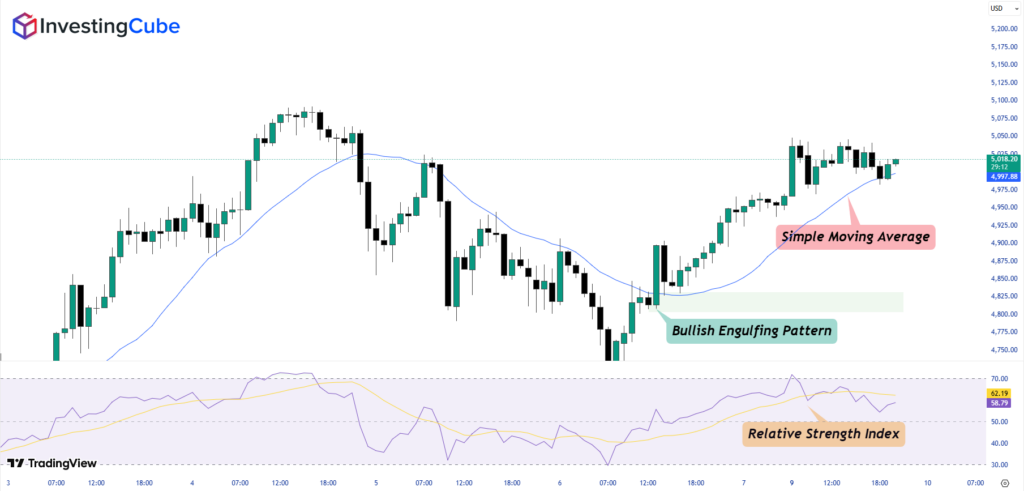
- Technical Analysis: Using candlestick patterns, moving averages, and the Relative Strength Index (RSI) to identify optimal entry and exit points.
- Volume: Ensuring sufficient trading volume to enter and exit positions smoothly without significant slippage.
- Sentiment: Monitoring real-time catalysts such as earnings announcements, central bank interest rate decisions, or geopolitical developments.
Intraday vs. Delivery: Key Differences
| Feature | Intraday Trading | Regular (Delivery Trading) |
| Objectives | To earn small profits from the market with less risk. | Long-term wealth creation and dividends. |
| Time Frames | Minutes to hours; same day close. | Months to years. |
| Risk Profile | High (leverage and speed). | Moderate (market cycles smooth out). |
| Capital | Leverage leads to lower capital required. | Requires full payment for shares. |
| Attention | High; requires active monitoring | Low; passive “buy and hold”. |
The Mental Hurdle: Risk vs Reward
It is about 20% strategy and 80% psychology. You must be prepared for:
Quick Decision-Making:
“Gut feelings” are not the signal the market is waiting for. You need a pre-defined plan.

Emotional Flatline:
The market doesn’t care about you. A professional trader sees a loss as a “business expense,” not a personal failure.
The Screen-Time Tax:
This is a high-touch job. If you are not able to dedicate 3-6 hours of focused attention, intraday trading may not be your cup of tea.
The Positives and Negatives: Taking a Balanced Approach
| Benefits of Intraday Trading | Risks of Intraday Trading |
| Fast profits – Capitalize on short-term price moves instead of waiting months. | High stress – screen time and rapid decisions drain focus. |
| No overnight risk | Amplified losses – Leverage and volatility can wipe out gains fast |
| Flexible strategies ie Scalping, momentum, or news-based plays fit different styles. | Fees add up – Commissions and spreads eat into small, frequent trades. |
| Liquidity access – Easier entry/exit in major stocks with tight spreads. | Fear or greed led to impulsive, costly mistakes. |
| Sharpens technical analysis skills faster than long-term investing. | Experience costs real money; beginners often lose first. |
Understanding Costs and Execution
Intraday trading is a volume game, and your most powerful weapon is your choice of platform. Professional traders look for:
Low Brokerage: Frequent trading makes flat-free brokers or deep intraday discounts essential.
Order Execution Speed: In fast markets, even a 2-second delay can cost your profit.
Platform Stability: Trade on stable platforms such as ATFX or established discount brokers with advanced, responsive charting tools.
Pro Tip: Never enter a trade without knowing your breakeven point — the exact number of paise or cents the stock must move just to cover your costs.