



- Japan is overly dependent on oil imports from the Gulf and the closing of the Strait of Hormuz has dealt it a blow
- The BoJ is in a strategic dilemma on whether to cut interest rates and boost the economy or raise them and add to the current pressure
- The Nikkei 225 Index could improve in the coming days if Japan releases its strategic oil reserves
Barely two weeks after war spiked across the Middle East in February, Japan’s main stock gauge, the Nikkei 225, plunged more than 7%, sliding toward its lowest point since December 2025, around 51,700. While many analysts point to sudden jumps in oil prices as the key reason behind the fall, digging deeper reveals an underlying weaknesses baked into Japan’s economy that might stretch out any downturn should unrest continue.
The Energy Chokepoint
Right now what drags down the Nikkei hardest ties back to how exposed Japan is energy-wise. While the U.S. ships out more energy than it uses, nearly all of Japan’s crude oil comes from Middle Eastern sources instead. About 1.6 million barrels roll in daily via Hormuz waterway each day. So if that route shuts even a few weeks, import costs soar, the yen dips fast, economic growth stumbles into inflationary drag soon after.
Also, according to reports from The Japan Times, the effective closure of the Strait of Hormuz has left dozens of Japan-related vessels stranded.
Certain sectors within the index have been particularly hard-hit. Resonac Holdings fell by 12.80%, Furukawa Electric by 11.28%, and Lasertec Corp by 11.20%. Tech companies like Kioxia Holdings, Fujikura, Advantest, SoftBank Group, and Tokyo Electron all saw drops between 8% and 10.5%.
These are not random casualties. They are companies with high energy input costs, global supply chain exposure, and sensitivity to the kind of risk-off sentiment that the conflict is generating in institutional portfolios worldwide.
Is a Reversal Possible?
To see a turnaround, Japan needs more than just the fighting to stop. The market wants a sign from the Bank of Japan (BOJ). Governor Kazuo Ueda suggested that the BOJ might hold off on raising rates to help the shaky economy. If the BOJ clearly becomes more supportive, it could give the market the boost it needs to stop the decline.
The BoJ is in a tough spot and might delay its planned rate hike in March. It’s balancing higher import costs against the risk of a recession. If oil prices stay high around $120–$130, Japan’s import costs will rise, hurting the yen and making it harder for the BoJ to fight inflation.

On March 8, the government directed the national oil storage base in Shibushi to prepare for a possible release of crude oil in response to the crisis. Should fighting fade fast, supply hiccups might shrink and prices could dip back down, quieting worries about stalled growth paired with high costs.
The Worst-Case Scenario
A long war might keep oil costs elevated, pushing Japan into economic slowdown and rising prices. Should that happen, the Nikkei 225 may fall below 50,000.
Forecasts suggests Japan’s economy could slip into stagnation paired with rising prices, dragging GDP down by 0.6% below projections for 2026. Price hikes alongside shrinking output create a bind for policymakers. This situation traps the central bank because easing rates might fuel inflation and weaken the yen more, while hiking them risks deepening an economic downturn. Soaring costs meet slowing activity, leaving little room to act.
Nikkei 225 Forecast
The Nikkei 225 has its RSI at 37, indicating a strong control by the sellers. The Index pivots at 53,553 and the downside is likely to prevail if action stays below that level. The first support is currently 51,408. If this fails, the next major structural support is at 50, 500, below which the next 50,000 psychological support level could be compromised. The primary resistance level is at 54,723, with the second one at 54,000.
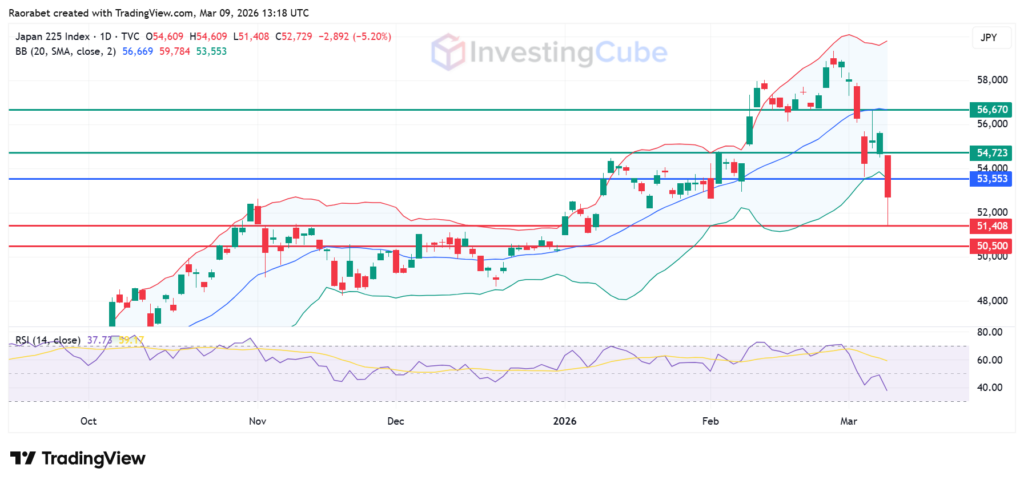
Nikkei 225 Index on March 9, 2026, showing the key levels of resistance and support on the daily chart. Created on TradingView
Because Japan relies on the Middle East for 90% of its oil, any problems in the Strait of Hormuz directly affect its industries and quickly raise costs for consumers.
Reserve releases can stabilise refinery input costs and domestic fuel supplies, but it won’t restore confidence in corporate profits, stabilize the yen, or improve global risk appetite. The Nikkei is falling because of market sentiment and overall economic fears, not because of fuel shortages in Japan.