


- The Dow Jones Index dropped to near November 2025 lows before President Donald Trump's comments on Middle East boosted it up
- A sharp rise in crude oil prices and closing of Strait of Hormuz has strained global economic outlook
- US inflation data and FOMC meeting set for March 2026 will likely be the most consequential events to the Dow's attempt to reclaim 50,000 points
The Dow Jones Industrial Average hasn’t had a great month, dropping about 2.6% in the past month. Yesterday, it hit its lowest point since late November 2025, floating around 47,740 points. With the index currently hovering around the 47,740 mark, investors are looking for any sign of a floor.
War Risk Cools Off
Right after the President spoke, trading desks lit up with frantic selling. Oil price, which has jumped near $120 earlier, dropped to $86, down more than 6%. Hope has been rising quietly in the hours that followed, with many hoping that tensions ease in the Strait of Hormuz waters. Reduced risks there could mean steadier fuel supplies worldwide.
Energy prices easing brings real breathing space to the Dow Jones Index, weighed down by industrial and spending-linked companies. Should tensions ease in the near-term, gains might follow, nudging markets toward bolder moves. Yet without clear timing from Trump, doubts linger underneath. Words unbacked by action could pull jitteriness back into view.
Is 50,000 Points Within Reach by End of Q1?
The 50,000-point mark seems harder to reach now compared to February, when the Dow was above 50,100. To get back to those high numbers before March 31, the index needs to go up almost 5% in just a few weeks.
While technology and defense stocks have been doing well because of the conflict, many industrial companies are struggling with ongoing inflation and high interest rates. According to Charles Schwab, tariffs have pushed retail prices up by almost 5%.
For the Dow to recover to 50,000 in Q1, we need a real ceasefire that brings oil prices down below $85, a February US CPI report on Wednesday that shows inflation is no more than 2.5%, and the Fed’s meeting on March 18–19 to suggest they might cut interest rates by mid-2026. All three are possible, but none are guaranteed.
Is the Geopolitical Risk Factor Overblown?
In one narrow sense, yes, and the market’s own behaviour confirms it. The Dow moved 1,100 points on an intraday basis in response to an unverified, informal comment from a president speaking to a reporter. That is not fundamental repricing. That is panic positioning and its immediate unwinding.

In a deeper sense, however, the risk is not overblown at all. The S&P 500 materials index went down 2.4%, and industrials dropped 2.3% as investors worried about whether the war could cause the economy to slow down or enter a recession.
Goldman Sachs and Caterpillar, which have the most influence on the Dow, each dropped more than 3.5% in one day. WTI crude went up about 18% to over $107 a barrel as Kuwait announced production cuts and Iraq’s production dropped by about 70% because they were running out of storage space.
Dow Jones Index Forecast
The Dow Jones RSI is at 36, which means it’s coming out of oversold territory but doesn’t have a lot of upward momentum. The main support level is now at 47,035, and it closes below that level, it could drop to 46,699, near 200-day EMA. To show that the upside momentum is becoming more stable, it needs to get back to 47,876, with the 100-day EMA level at 48,124 being the next level to break above.
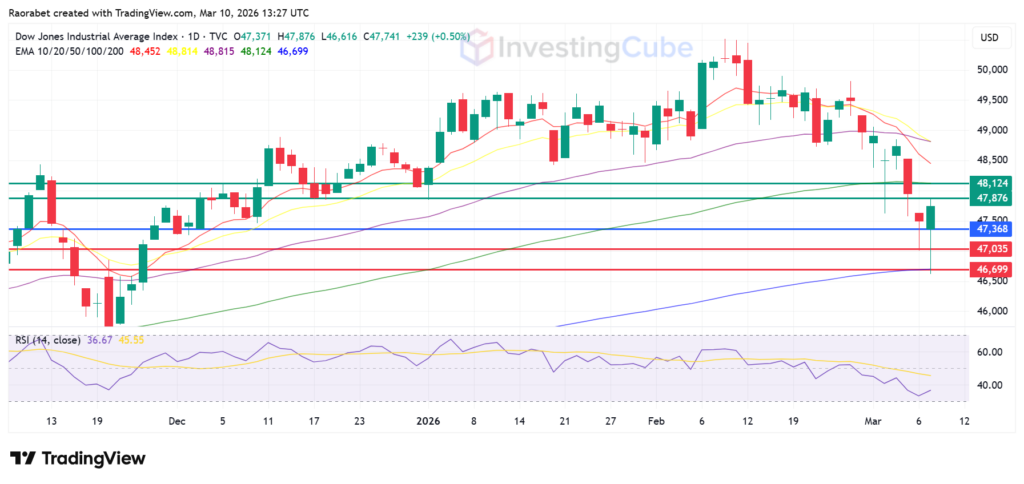
Dow Jones Industrial Average (DJIA) on the daily chart with key support and resistance levels for March 10, 2026. Created on TradingView
Historically, these types of statements only calm the market temporarily. For the Dow to have a lasting rally, we need real proof that things are calming down, like steady oil prices and diplomatic talks that the market believes in.
A formal cessation of hostilities would likely trigger a relief rally, pushing the Dow back toward the 49,000 level. Lower energy prices will help industrial companies, but long-term growth still depends on what the Federal Reserve does with interest rates.
The most important data is the CPI data alongside the Fed’s March 18 meeting. Economists forecast both headline and core inflation will increase at about 2.5% annually, but the market will probably focus on how the recent energy price increases affect these numbers.