



- GBP/INR has recently cracked under pressure as the rupee's fundamentals improve
- The UK's Labour government has recently encountered a political storm around key figures, with PM Keir Starmer's office tenure potentially threatened
- Inflation rates in India and UK as well as GDP growth figures will likely have the biggest impact on GBP/INR
The GBP/INR pair started 2026 strong, with nine straight wins in late January, hitting about 126.50. This rise mirrored the pound’s strength as the U.S. dollar weakened. Still, February saw a change, with the rupee bouncing back, dropping the pair by around 3% to near 122.80 as of this writing.
Why the Rupee is Rebounding
The rupee’s recovery comes from a combination of central bank support, lower oil costs, and positive trade news. The Reserve Bank of India (RBI) has stepped in to keep it from getting too weak. A drop in global oil prices has eased import issues, helping lower India’s trade gap.
At the same time, the tariff issue that hurt the rupee in 2025 has started to improve with the U.S. and India trade agreement reducing tariffs to 18% from 50%, which has improved the economic outlook.
The 2026 Outlook for GBP/INR 2026
The second half of the year could be better for the pound. If the Bank of England stops cutting rates by mid-2026, the pound might gain. The pound, though, is dealing with slow growth, lower inflation, and new political doubts. UK inflation fell to 3% in January, the lowest in almost a year, pushing the Bank of England to consider cutting rates. Even though the BoE held rates at 3.75% in February, a 5-4 vote suggests a rate cut might happen as early as March or April.
Adding to the issues, a recent election loss for the Labour government has brought some political risk back into the pound. Investors now wonder if the government can keep its finances in order. Political uncertainty is adding to the problems.
Two senior government officials quit in mid-February over a controversy involving Prime Minister Starmer’s choice of Peter Mandelson as the Washington ambassador, and Scotland’s Labour leader has asked for a change in leadership. The pound has stayed steady through these events, but the weakness is there.

The pair probably won’t reach January’s highs of ₹127 soon, but a big drop below ₹120 is not likely either.
GBP/INR Forecast
The GBP/INR pair has gone below its Volume Weighted Moving Average (VWMA), showing it has lost January’s gains. The pivot is at VWMA at 123.22 and the first support is now at 122.45. Action below that level will send the stock lower to test 121.86. On the upside, the first resistance will likely be at 123.70. If it goes above this, the next target is 124.30.
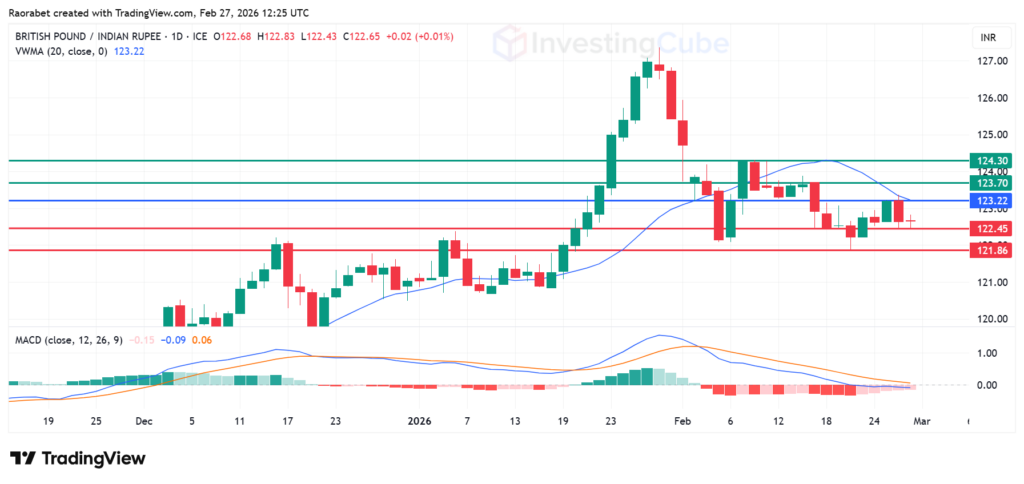
GBP/INR daily timeframe chart on February 27, 2027, showing key levels of resistance and support. Created on TradingView
The key sources of momentum for the rupee include RBI intervention, falling oil prices easing imports and US-India trade deal boosting sentiment.
The Bank of England’s March 19 rate decision is the key near-term event for sterling, while India’s monthly trade deficit data and Brent crude levels are the critical rupee indicators.
Yes, if India keeps its GDP growth above 7% and the current account deficit is under control. Still, a sudden jump in global oil prices could quickly weaken the rupee.