


- USD/JPY has been consistently rising since mid-February and the Middle East war has not disrupted the dollar's upside momentum
- Rising oil prices have put a strain in Japan's import bill, weakening the yen
- Japan's Ministry of Finance has indicated intention to intervene in the coming days and the USD/JPY pair is currently approaching the intervention levels
In global finance, the Japanese yen and U.S. Dollar are often seen as safe options. But, when tensions rose between the U.S., Israel, and Iran in early 2026, something unusual happened. The Yen didn’t gain strength as people looked for safety. Instead, the USD/JPY pair went up, passing 157.80. This has traders wondering if the yen is still a safe choice, especially with today’s energy problems.
Why the Yen is Losing the Haven War
The main reason the yen is weak now is that Japan really depends on energy imports. About 94% of Japan’s crude oil comes from the Middle East, and almost 74% goes through the Strait of Hormuz. When oil prices jumped because of the strikes on Iran, the market began to expect economic issues for Japan.
The U.S. is mostly energy independent, but Japan’s trade situation gets worse every time oil prices increase. The yen’s safe bet is built on the yen carry trade. Global investors have been borrowing yen at low rates to invest in higher-return asset. When risk jumps those positions get sold, yen gets repatriated, and the currency strengthens.
Yield Differentials Favour USD/JPY Upside
Besides oil, the reason USD/JPY has been rising since mid-February is the difference in interest rates. U.S. 10-year Treasury yields are above 4.1%, while Japanese government bond yields are just over 2.0%. This makes dollar investments more appealing right now, pulling money toward the dollar.
The Fed has delayed expectations of cutting rates, and money markets expect about 37 basis points of easing for 2026, less than before. If the Bank of Japan has to stop its rate hikes to deal with economic problems caused by the war, while the Federal Reserve keeps rates high to fight inflation, the interest rate difference will keep attracting USD/JPY buyers.
Is a Near-Term Reversal Possible?
Yes, there are reasons why things could reverse, and we shouldn’t ignore them. First, Japan’s Finance Ministry has a level where they usually step in. USD/JPY is getting close to levels that have triggered action in the past, so further dollar gains could be risky.

The 157–160 range has historically been a concern. Also, Finance Minister Satsuki Katayama has given strong warnings, suggesting that Japan might work with the U.S. to support the yen if it gets near 160.00.
USD/JPY Forecast
The USD/JPY’s RSI on the daily chart is in the low 60s, showing strong upward momentum that isn’t yet overbought. Immediate support is at 157.00, below which the next one is likely to be at 157.00. If it breaks below the 50-day MA at 156.12, that would confirm a risk of bearish reversal. North of the 157.35, the immediate target for buyers is the 158.00. Going above that opens the way to 158.45.
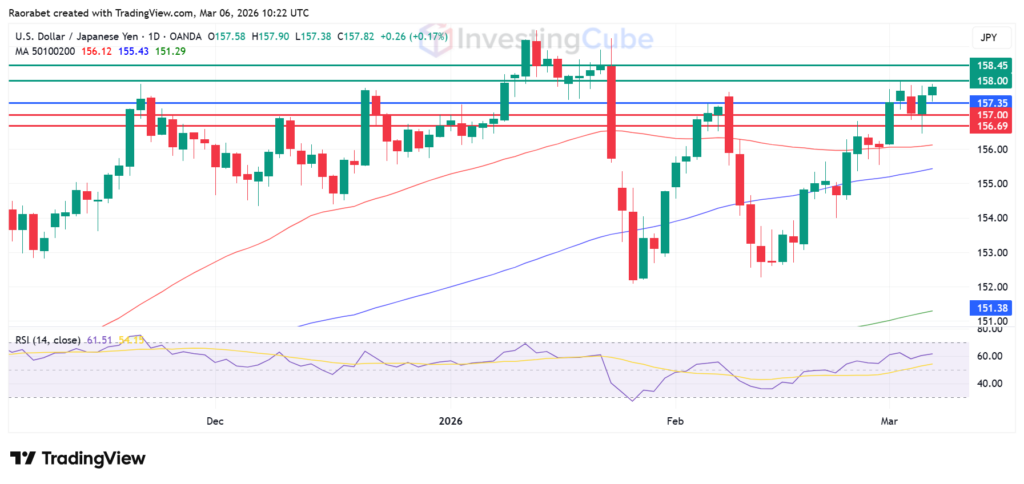
USD/JPY on the daily chart showing key levels of resistance and support on March 6, 2026. Created on TradingView
The yen is struggling because Japan imports so much energy. The Middle East conflict has pushed oil prices up and disrupted supply, which hurts Japan’s trade and economy more than the U.S.
In the past, the Ministry of Finance gets worried around the 157–160 range. Intervention warnings get stronger above 158, and they’re likely to act if the yen weakens too much and too fast toward 160.
Governor Ueda has declared the March meeting for a hike, but many observers think there will be a pause or a very cautious “dovish hike” because of the war’s effect on GDP and PM Takaichi’s penchant for dovish policies.