


- Strong U.S. dollar and firm oil prices support upside bias.
- RBI intervention could limit excessive gains above 92.0.
- Short-term outlook range-bound with mild bullish bias.
Overview
The USD/INR is holding towards the top end of the recent range. It spot between 90.5 to 91.0 after two days of notable weakness in INR. The pair have been buoyed by broad dollar strength, crude at higher prices, and wobbly sentiment in emerging markets. Given the still high global macro risks, traders are now deciding whether USD/INR is about to breakout for another leg higher or if it is consolidating before a pullback.
Macroeconomic Backdrop
The reason USD/INR is strong — the continued strength of the US dollar. Hopes the US Federal Reserve will offer a supportive echo of European central banks more dovish lean while gently whetting expectations for future policy easing has also left US yields underpinned. Higher yields from the US often lead to fund outflows into dollar-local assets, which in turn have a bearish effect on currencies like the rupee.
Meanwhile, increased safe haven demand for the dollar has returned as global trade tensions and tariff-related uncertainties have risen. Currencies of emerging market countries tend to suffer in such situations, especially when accompanied by a risk-off tone.
For India, in particular, the crude oil prices is a critical variable. India is one of the world’s largest oil importers, and comes under pressure on the external balances when the price of oil goes up. More expensive oil tends to fuel India’s trade deficit, raising dollar demand at home and weighing on the rupee. Recent buoyancy in oil markets has consequently added upside pressure to USD/INR.
Moreover, international portfolio inflow are still an important factor. Persistent outflows from Indian stocks or bonds could lead to a faster decline in a rupee, while returning inflows might help support it.
Technical Structure
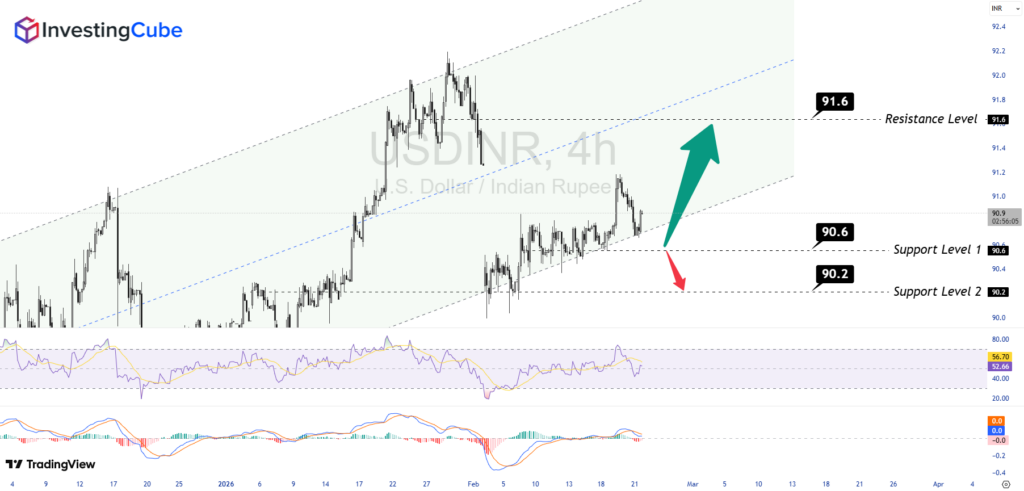
Technically, the pair is rising inside a short to medium term channels. The pair has steadfastly maintained higher lows in recent weeks, signaling that support for dollar remains.
Momentum indicators (RSI and MACD) have been siding with bulls, though they are nearing overbought territory, which implies upside momentum is still intact, although somewhat decelerating.
Key technical levels to monitor:
- Major resistance level: 91.6
- Immediate support: 90.6
- Stronger support: 90.2
A clean move through 91.6 appears to set up a course for retest of the 92.0 area, with any failure from keeping above 90.6 inducing short-term consolidation towards 90.2 stronger support area.
Bullish Scenario (USD Strength Continues)
The dollar may rise further U.S. data holds up and treasury yields remain elevated. In that case, USD/INR could rise towards 91.6 and test 92.0.

Additional catalysts for upside include:
- Higher oil prices (Crude/Natural Gas).
- Risk-off sentiment in global equities.
- Foreign capital outflows from India.
- According to analysts, lack of RBI’s intervention in the forex market prevented a steep decline.
If these things can come to pass, say hello with a further rally in the coming day testing more resistance on further outperformance by the dollars and overall bias.
Bearish Scenario (Rupee Stabilizes or Strengthens)
A retreat from here for USD/INR could come should global risk appetite, recuperate and oil prices cool, and a softer dollar, triggered by poor U.S. data or signals of dovishness from the Federal Reserve, would also take some pressure off the Rupee.
A key factor is RBI intervention. The Reserve Bank of India has traditionally intervene to soften extreme volatility, but if the 91.6 to 92.0 zone is under active governments stewardship to protect the rupee, momentum may fade at higher levels.
With that being said a break below 90.6 would pave the way for corrective slide towards 90.2 followed by 89.5.
Short-Term and Medium-Term Outlook
Short-Term (1-5 days):
We expect USD/INR to continue its range-bound momentum between 91.6 and 90.6 unless any key micro driver is in sight, volatility could rise ahead of major U.S. data that is due out.
Medium-Term (1-4 Weeks):
The larger dynamic still favors mild dollar strength especially if oil prices remain buoyant, and U.S. yields creep higher. Well, but the reward could progress slowly in place of taking off somewhat that RBI intervention could kind limit some ultra gains on the upside.
In the broader picture, the bias looks slightly bullish for USD/INR, but it is hovering around short-term resistance indicating consolidation can be seen ahead of any clear break somewhere.
Frequently Asked Questions
India imports most of its crude oil. When oil prices rise, India needs more dollars to pay for imports, increasing USD demand and weakening the rupee.
The RBI can intervene to reduce volatility, but it typically aims to smooth movements rather than fix a specific exchange rate level.