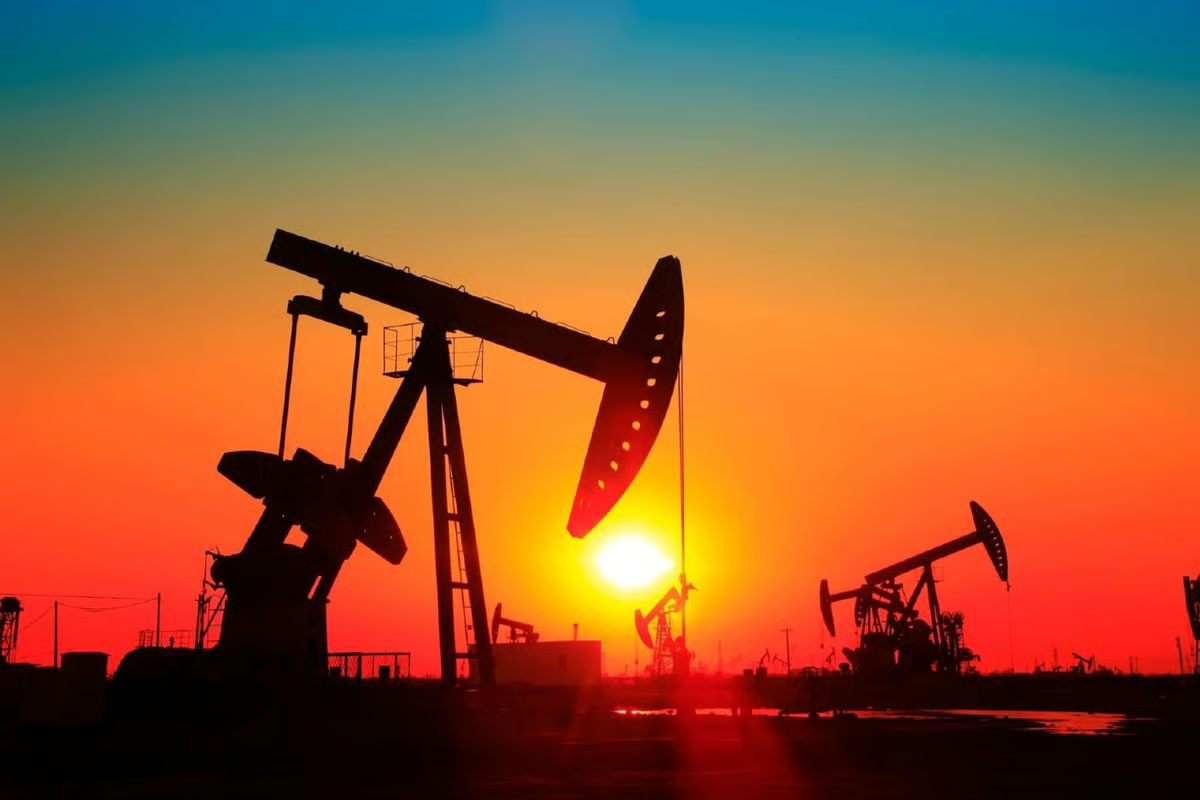
- Roughly 20% of global oil flows are at risk, but historical data shows that geopolitical spikes are often shorter than the headlines suggest.
- Beyond the pump, $90+ oil acts as a massive drag on logistics and agriculture, threatening to keep the Federal Reserve in a "higher for longer" interest rate stance.
- Rather than speculating on short-term price swings, long-term wealth is traditionally built in midstream "toll-booth" stocks that pay consistent dividends regardless of Brent’s daily mood.
The energy markets are currently navigating a “geopolitical fever dream.” Since the onset of Operation Epic Fury on February 28, the joint U.S.-Israeli air campaign in Iran, crude oil has transitioned from a stable commodity into a high-octane volatility play. While prices have retreated from the Monday morning panic peak of $120 per barrel, they remain stubbornly elevated, with Brent trading at $93.63 and WTI at $93.79 as of Wednesday night.
For investors, the temptation to “chase the spike” is real. But before you back the truck up on oil producers, it’s worth looking at the history of war premiums and the cold reality of the “Strait of Hormuz” blockade.
Oil Price Spike Explained: Why War-Driven Rallies Often Fade
History has a very consistent message for investors: geopolitical oil spikes are intense, but they are rarely permanent. When military operations begin, markets price in a “worst-case scenario”, in this case, a total closure of the Strait of Hormuz. However, as the initial shock fades, prices often subside even before the fighting stops, as forward-looking traders shift their focus back to global supply-demand fundamentals.
Currently, Brent is trading about 31% above its pre-war level of $71. This “war premium” is a double-edged sword for the global economy. As energy analyst Patrick De Haan noted, the jump in diesel prices to $4.83 a gallon is a “massive jolt” to the trucking and agriculture sectors. For the average consumer, this energy spike acts as a stealth tax, potentially wiping out the benefits of recent tax cuts for 70% of Americans.
Midstream Energy Stocks: The Stable Way to Profit From Oil Markets
If you’re looking at energy for your portfolio, focus on the midstream sector. These are the companies that own the pipelines and storage tanks. They operate like toll roads; they don’t care if a barrel of oil costs $40 or $140, as long as it’s moving through their pipes.
These stocks often provide:
- Stability: While upstream producers (the ones drilling) see their profits swing wildly with the price of Brent, midstream companies offer a much smoother ride for long-term investors.
- Attractive Dividend Yields: Many midstream players offer yields in the 5% to 8% range.
- Long-Term Contracts: Their revenue is backed by multi-year agreements, shielding them from the daily volatility of Operation Epic Fury.
However, even the most stable dividend plays are influenced by the broader market’s mood, and right now, that mood is being written on the price charts of the underlying commodity.

WTI Crude Technical Analysis: Key Support and Resistance Levels to Watch
WTI Crude is currently trading at $93.79 per barrel, sitting in a high-stakes “wait-and-see” zone.
- Resistance: Until oil can break and stay above $95, the “war premium” is likely capped, and we may see prices bounce back down from here.
- Support : If the price drops below $88, it suggests that the initial panic is over, and we could see a quick slide back toward $81.50.
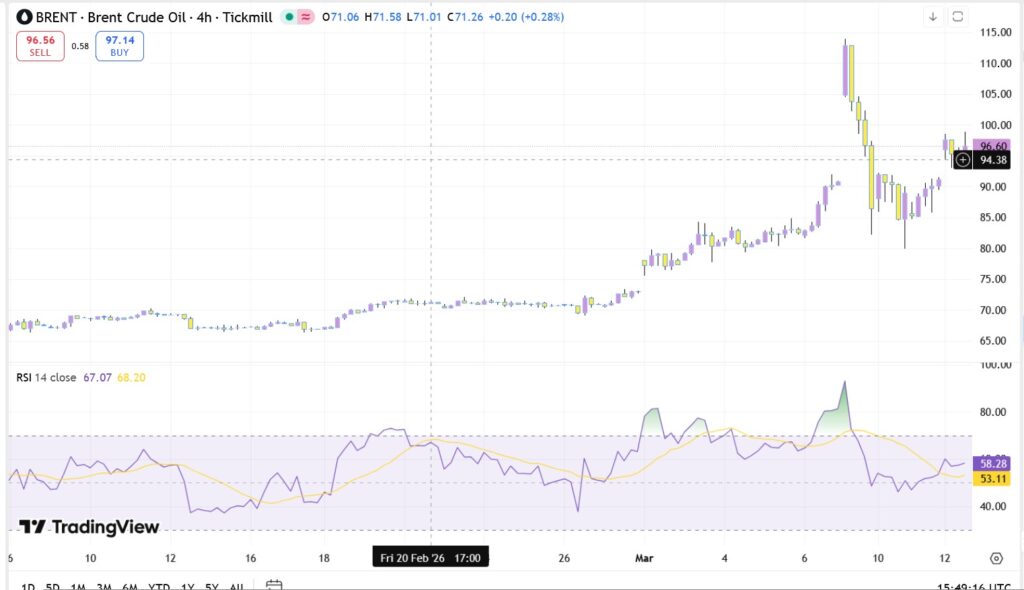
Ultimately, the $88 level acts as the line in the sand; a solid bounce here keeps the bullish trend alive, while a breakdown likely confirms that the ‘war premium’ is finally starting to deflate.
Conclusion: Don’t Let Fear Drive Your Portfolio
Investing in oil stocks solely because of the Iran war is a classic “reactive” mistake. While $93 oil is painful for consumers, the most successful investors look past the immediate carnage. History suggests that equity markets rapidly rebound once a ceasefire occurs, and the oil “bubble” typically deflates faster than it inflated.
Stay diversified, focus on quality midstream income, and remember: the best time to buy great businesses is often when the headlines are the scariest.
Speculating on a war-driven price spike is risky; a better strategy is to invest in high-quality energy companies with strong dividends that can withstand price volatility.
Beyond gas prices, high oil costs drive up shipping and agriculture expenses, which fuels inflation and makes it less likely for the Federal Reserve to cut interest rates in 2026.
Historically, oil prices tend to subside quickly as soon as military operations wind down, as the market begins to price in the restoration of global supply chains.